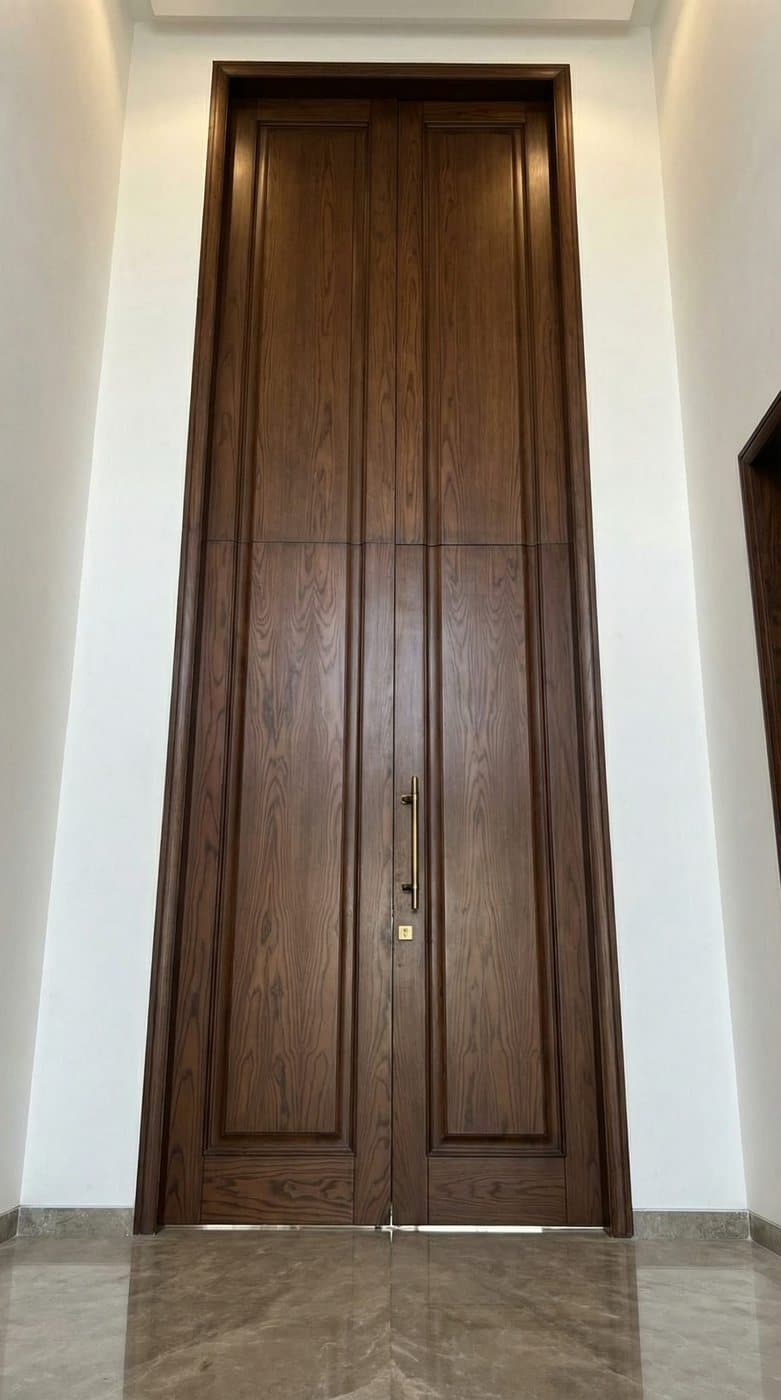
Karachi's property market has changed what renovation is for. Buyers in DHA, Clifton and PECHS increasingly acquire an older, well-located property and rebuild the interior entirely, because the location cannot be bought elsewhere and the interior can be replaced.
That is a sound strategy. It also involves living through something nobody describes accurately before it starts. So here is the unglamorous version.
The sequence, and why it cannot be reordered
A full renovation runs in a fixed order — and the media wall and services belong early in it: strip out, then civil and structural work, then first-fix electrical and plumbing, then flooring, then false ceilings and lighting, then joinery installation, then second fix, then paint and snagging.
The single most common and most expensive mistake is ordering joinery before the civil work is finished — which is why our process puts the survey and the drawings before anything is cut. Walls move during a renovation. A kitchen manufactured to pre-civil dimensions arrives either short or oversized, and the fix is always visible.
What people do not budget for
- Rewiring. Older Karachi properties routinely need it, and it is rarely in the first estimate.
- Plumbing that only reveals itself once tiles come off — this is the most common source of a genuine overrun.
- Levelling. Twenty millimetres of fall across a room has to be resolved before flooring, and it costs money.
- Building society approvals and lift or access charges in apartment blocks.
- Somewhere to live. If the kitchen and a bathroom are both out, the property is not habitable, and that is a real cost.
None of these are avoidable, but all of them are foreseeable — which is why they should appear in a written scope before work starts rather than as a conversation in week five.
“A renovation goes wrong in the survey, not on site. Site is only where you find out.”
Turnkey, or trade by trade?
Managing individual trades yourself is genuinely cheaper on paper. It is also a full-time job, and the saving evaporates the first time two trades disagree about a sequence and one of them has to redo a week of work while you arbitrate.
A one-window arrangement — civil works, flooring, false ceilings and lighting, media walls, and the built joinery — kitchens, wardrobes, vanities and doors — under a single contract — puts the coordination risk on the contractor instead of on you. That is what most people are actually buying when they buy turnkey.
How to hold a schedule
Timelines slip for three reasons, and only one of them is the contractor's fault. The first is late client decisions — every day a finish is undecided is a day of manufacturing not started. The second is scope added mid-project. The third is discovery: what was behind the wall.
The defence against all three is to make every material decision before production begins, agree a written schedule at that point, and treat mid-project additions as a formal change with their own date. It sounds bureaucratic. It is the difference between eleven weeks and twenty.
Living through it
Dust travels further than anyone expects, and the difference between a tolerable renovation and a miserable one is almost entirely site discipline: sheeting the routes, protecting the floors that are staying, and clearing up at the end of every day rather than at the end of the project.
Our clients mention this more often than they mention the joinery, which tells you how rare it is.
What it is worth at the end
A well-executed renovation in a good Karachi location does two things: it makes the home work for how you actually live, and it repositions the property for a buyer who can see that the expensive, disruptive work has already been done properly.
If you are weighing up a renovation, send us the plans or the address. We will walk it, tell you honestly what we would and would not do, and put a written schedule against it before you commit to anything.